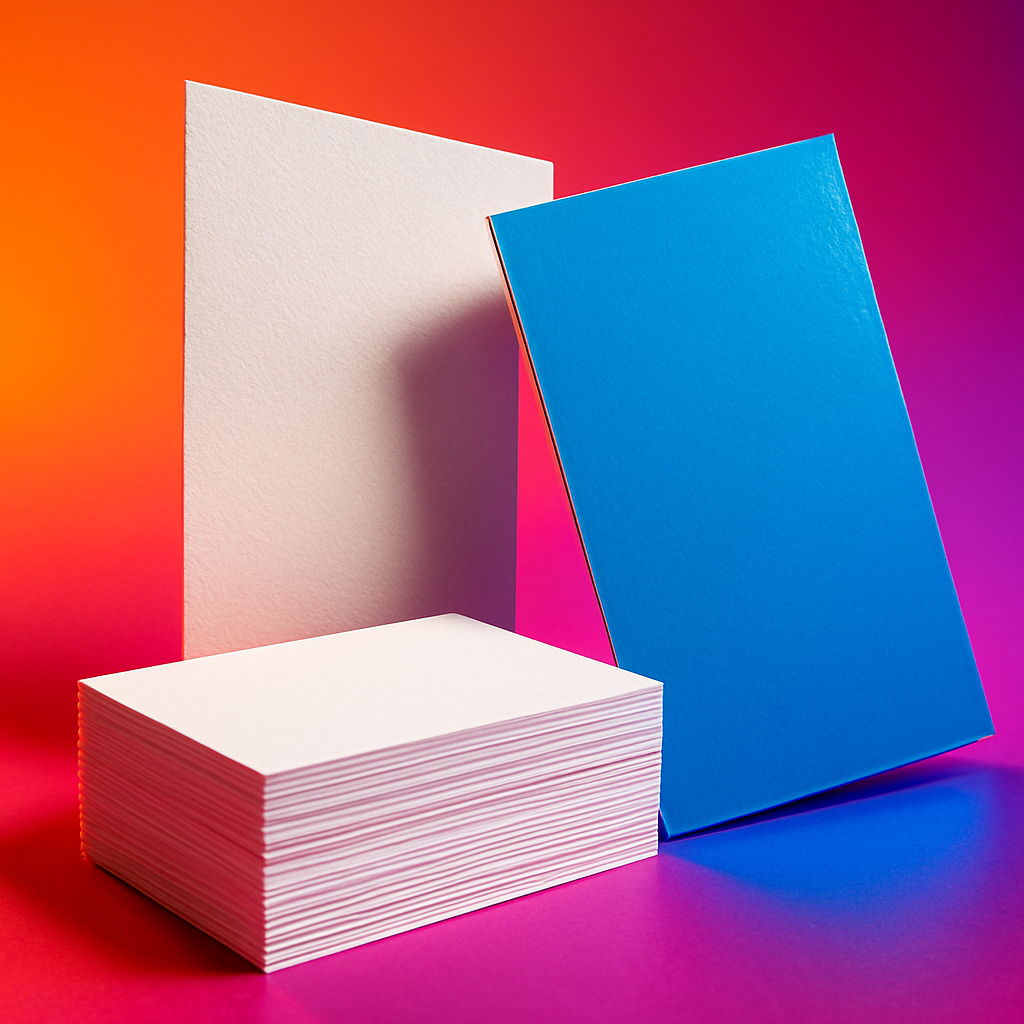
Best Paper Stock for Business Cards and Marketing
Touch and Feel: The Psychology of Paper
In a world of digital screens, the physical weight and texture of your marketing materials communicate as much as the words themselves. A thin, flimsy card suggests a brand that cuts corners. A thick, sturdy card suggests reliability and premium quality. Selecting the right paper stock for business cards is crucial for brand perception. For marketing materials, the best cardstock for marketing materials offers durability and visual impact. Consider paper finishes for brochures, the thickness of business cards, and coated vs uncoated paper when planning premium paper for flyers, cardstock options for postcards, and other paper types for professional printing.
Premium Business Cards PrintingUnderstanding Paper Points (pt)
In the printing industry, paper thickness is measured in "points." A point is 1/1000th of an inch.
- 14pt Cardstock: A high-quality standard for postcards and business cards. It is durable and professional.
- 16pt Cardstock: The "Super Cheap Cards Standard." We believe every business deserves a premium feel. 16pt is significantly thicker and stiffer than what you'll find at local copy shops.
- 100lb Gloss Book: This is a premium "paper" (not cardstock) used for high-end brochures and flyers. It has a high-quality "catalog" feel.
Finishing the Job: Coated vs. Uncoated
The finish you choose determines how your colors look and how the card feels in hand.
UV High Gloss
This is a liquid coating that is cured with ultraviolet light. It creates a brilliant, mirror-like shine. It makes colors extremely vibrant and provides a layer of protection against scratching and moisture. Best for: Image-heavy designs, photos, and high-impact sales cards.
Matte / Aqueous Finish
Matte offers a sophisticated, non-reflective look. It feels smoother and "silkier" than gloss. It is resistant to fingerprints and easy to read under bright lights. Best for: Minimalist designs, luxury brands, and text-heavy content.
Uncoated
Uncoated paper has a natural, slightly textured feel. It is the best choice if you need to write on the card with a standard pen (e.g., for appointment cards). Best for: Stationery, appointment cards, and "earthy" organic brands.
Premium Business Cards PrintingWhen choosing paper finishes for brochures, a matte coating can lend a sophisticated feel while a gloss finish boosts color vibrancy. For premium paper for flyers, 100lb gloss or a UV high‑gloss coating provides the eye‑catching impact needed for trade shows. If you need cardstock options for postcards, 14pt and 16pt stocks offer durability and a tactile premium look. Each paper type for professional printing—whether coated or uncoated—affects ink absorption, color fidelity, and overall perception.
Choosing the Right Paper Finish for Brochures
Choosing the right paper finish for brochures is essential for conveying the desired brand message and aesthetics. Gloss finishes provide a shiny and reflective surface, making colors pop with vibrancy and an eye-catching appeal, well-suited for brochures. However, gloss finishes can be prone to fingerprints and glare, which might not be suitable for text-heavy brochures. In contrast, matte finishes offer a sophisticated and non-reflective surface for brochures, enhancing the readability of text and providing an elegant look. Matte is preferred for minimalist brochure designs. Silk finishes combine gloss and matte qualities, offering a smooth texture ideal for brochures. Lastly, soft-touch finishes add a luxurious feel with a velvety texture, suitable for high-end brochures. Consider these paper finishes for brochures carefully.
Understanding Paper Weight and Thickness
Paper weight and thickness are vital in the perception of printed materials, such as business cards. Paper weight is measured in points (pt), pounds (lb), and grams per square meter (GSM). Understanding these measurements can help you choose the right paper for your business cards and marketing materials. Here’s a quick comparison:
| Paper Type | Points (pt) | Pounds (lb) | GSM |
|---|---|---|---|
| 12pt Cardstock | 12 | 90lb | 250 GSM |
| 14pt Cardstock | 14 | 105lb | 300 GSM |
| 16pt Cardstock | 16 | 120lb | 350 GSM |
| 100lb Gloss Book | n/a | 100lb | 150 GSM |
The thickness of business cards can influence their perceived value. Choose the appropriate thickness for your brand’s message and image.
Cardstock Options for Postcards and Rack Cards
Cardstock options for postcards and rack cards are crucial to ensure durability and brand impact. For postcards, 14pt and 16pt choices offer robustness for mailing. Rack cards benefit from the same sturdy options. When selecting cardstock options for postcards and rack cards, consider the tactile experience they provide at trade shows and handouts.
Premium Paper for Flyers and Catalogs
For those looking for premium paper for flyers, 100lb gloss book paper is the ideal choice. Its glossy finish allows vibrant color reproduction, making flyers and catalogs visually appealing. The substantial feel of 100lb gloss book enhances perceived quality, essential for premium marketing materials. Consider premium paper for flyers and catalogs to make a lasting impression.
FAQs – Paper Types for Professional Printing
When selecting paper types for professional printing, you may encounter several questions. What kind of paper is best for brochures? Which paper types for professional printing offer the best color reproduction? Are there eco-friendly options? Understanding the nuances of paper types for professional printing helps in achieving desired results while aligning with brand values.
Professional Brochure Printing – explore our brochure options and paper finish choices.