
Watch the forecast, not the calendar
HVAC demand follows the thermometer. The first 90-degree week and the first hard freeze are when phones ring off the hook, and they're also when you can't take one more job.
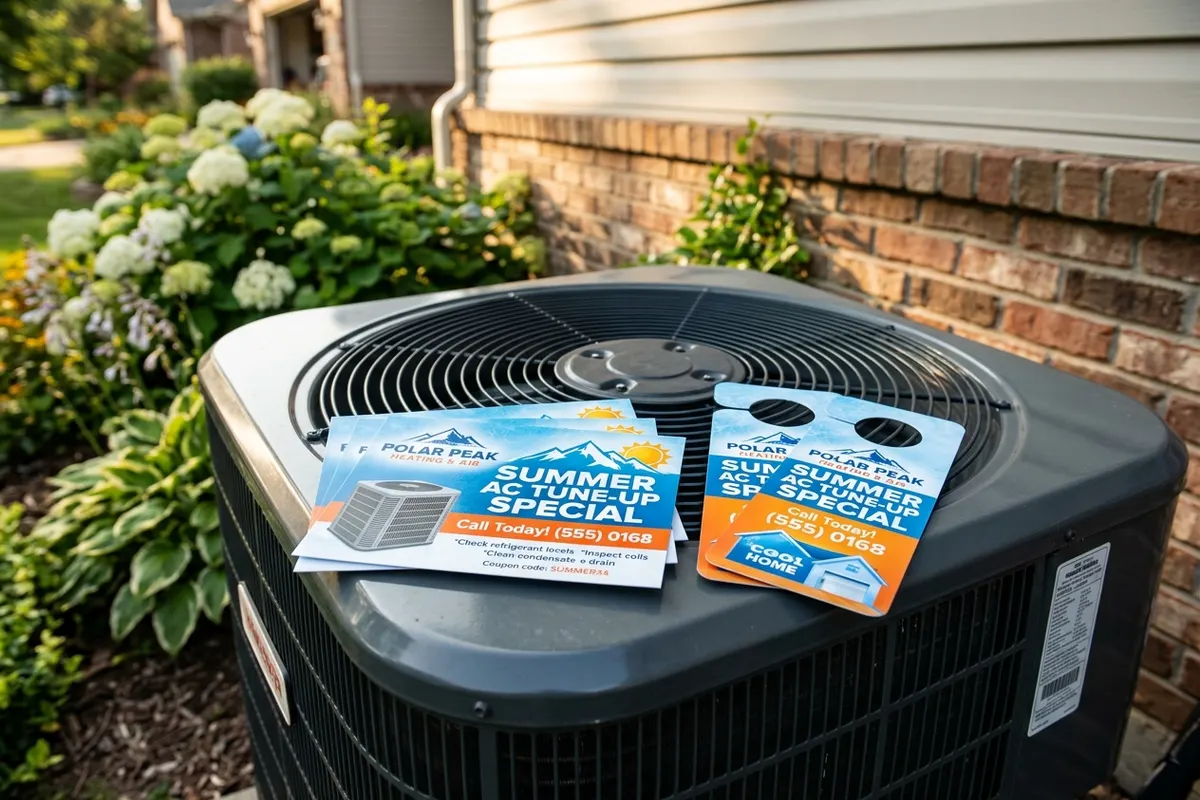
So mail before the rush, not during it. A tune-up postcard that lands three or four weeks before the heat moves work into the slower weeks and catches weak units before they die on a Saturday.
In mild climates the swing is smaller, but there's still a spring and a fall shoulder season. Mail into those.
Two drops a year, minimum
Spring card: A/C tune-up at a set price, a reminder to change filters, and a line about how old systems fail in the first heat wave.
Fall card: furnace or heat pump check, carbon monoxide safety, and the same set price.
A 6.5″ × 9″ EDDM postcard handles both. Order 10,000 for $889 and you've got 5,000 for spring and 5,000 for fall, to the same neighborhoods both times.
Every card should sell the club
A tune-up pays for the truck roll. A maintenance agreement pays for the business. Customers on a plan call you first when something breaks, and they don't shop three quotes.
Put the plan on the back of every card. Two visits a year, priority scheduling, a discount on repairs. Keep it to a few lines.
Techs should leave a printed plan sheet at every tune-up too. A customer who just watched your tech find a cracked capacitor is ready to sign.
Older neighborhoods mean replacements
Systems tend to last 12 to 20 years. Neighborhoods built in the same few years all have units hitting that age together, which makes them prime ground for replacement offers.
For those routes, swap the tune-up card for a replacement card: free in-home estimate, financing available, and a note about current rebates.
Rebates on heat pumps and high-efficiency equipment change often, so point people to the ENERGY STAR rebate finder or your local utility rather than printing a dollar figure that'll be wrong next year.
What the techs carry
Your techs already drive into the neighborhood. A stack of door hangers in every van turns each call into ten more impressions.
After a job, hang one on the houses on both sides and across the street. "We just serviced your neighbor's system. Same price for you this week." 2,500 of the 3.5″ × 8.5″ size cost $389.
They'll also need NCR work orders for signatures and job notes. 1,000 two-part 8.5″ × 11″ forms cost $279, with your logo and terms printed on top.
Put the monthly number on replacement cards
A new system is a big check, and the sticker price scares people off before they call. If you offer financing, show it as a monthly figure on the card, the way car dealers do.
Use the real terms from your lender and print the fine print they require. Don't guess at a rate.
People who wouldn't call about a full replacement will call about a monthly payment. That call is your chance to inspect the old unit and give them options.
Be the number they find at 2 a.m.
When the heat dies on a January night, nobody wants to search. They want a sticker on the furnace or a magnet on the fridge.
Put a sticker or a business card on every unit you service, with your emergency line. It costs pennies and it's sitting right there when the system quits.
If you offer after-hours service, say so in big type on the mailers. It's often the reason someone keeps your card.
A year of HVAC print
10,000 6.5″ × 9″ postcards ($889), 2,500 door hangers ($389) and 1,000 NCR work orders ($279) add up to $1,557 in printing.
That covers two seasonal drops of 5,000, hangers for every van, and work orders for a small crew. EDDM postage is extra and paid to USPS at the current rate.
The break-even calculator tells you how many tune-ups or replacements a drop needs to cover its cost, using your own average ticket.
Getting it printed
Postcard and door hanger design are $89 each. You'll get a proof and can ask for changes until it's right, and nothing is charged until you approve it.
If you want to time the drop to a forecast, call 512-573-1977 a few weeks ahead and we'll confirm current turnaround so the cards land before the heat.
Prices from our current price list. Content reviewed November 21, 2026.